

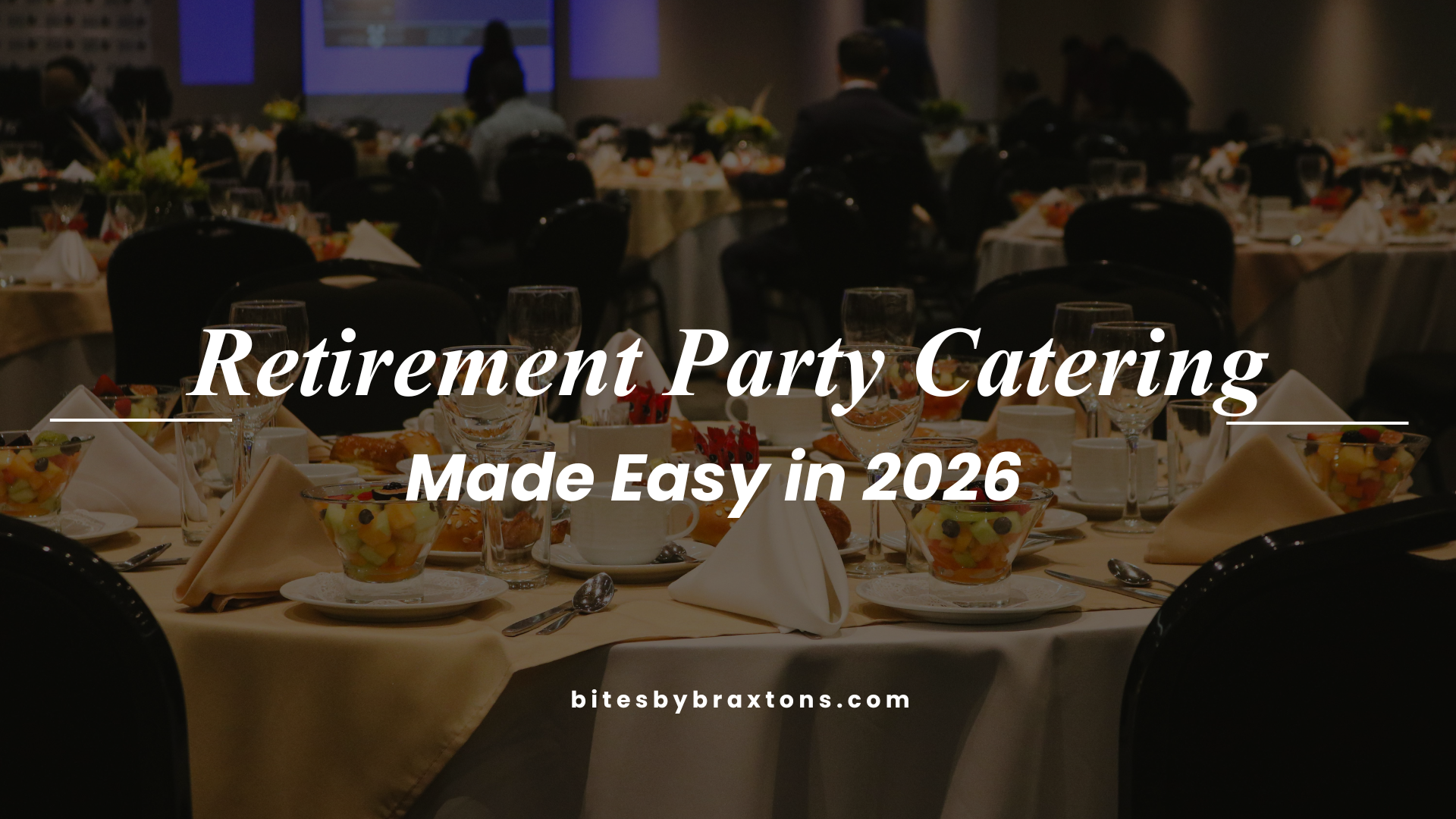
Retirement party catering is easier to plan than most people expect once you know the typical costs and food formats that work best for this kind of celebration. Most retirement parties run smaller than weddings or corporate events, which means a simpler buffet or finger food spread usually serves guests better than a full plated dinner. This guide covers what retirement party catering actually costs, which food styles fit best, and who typically ends up paying for it.
A retirement celebration is part farewell and part thank you, so the food should feel warm and easy to share rather than formal or fussy.
Unlike a wedding or a corporate gala, retirement parties rarely have a long planning runway. Someone usually finds out a coworker is leaving a few weeks before the date, and suddenly there’s a guest list, a budget, and a venue to figure out all at once. That compressed timeline is exactly why retirement party catering benefits from a simple, repeatable format rather than something custom built from scratch.
What Is Retirement Party Catering?
Retirement party catering refers to the food and service arranged for a colleague’s, friend’s, or family member’s send off into retirement. These events range from a quick office lunch spread to a full evening celebration at a rented hall, and the catering style usually follows that range closely.
Smaller office retirement parties tend to lean on simple trays and finger foods that guests can eat standing up between conversations. Larger evening celebrations, especially ones held at a home or rented venue, often shift toward a buffet setup since it keeps costs down while still giving guests a full meal.
How Much Does Retirement Party Catering Cost?
Retirement party catering pricing depends heavily on guest count and format, but most events fall into a fairly predictable range once you know which structure you’re using.
Per-person buffet pricing is the most common approach for retirement parties with 30 or more guests. Expect $12 to $25 per person for a casual buffet, or $20 to $35 per person if the menu includes a carved protein station or upgraded entrees.
Finger food and appetizer pricing works well for smaller office gatherings or cocktail-style events. Most catering trays in this format run $80 to $150 per tray, with each tray typically serving 15 to 20 guests as a light snack rather than a full meal.
Drop off catering, where food arrives ready to serve without staff, tends to run slightly cheaper than full-service catering with servers. This format works particularly well for office retirement parties where someone on staff can handle setup.
| Catering Style | Typical Cost | Best For |
|---|---|---|
| Buffet, per person | $12 to $35 per guest | Evening parties, 30+ guests |
| Finger food trays | $80 to $150 per tray | Office parties, cocktail hour |
| Drop off catering | $10 to $20 per guest | Smaller office gatherings |
For a typical retirement party of 50 guests, total retirement party catering costs usually land between $600 and $1,750 depending on the format chosen and whether staffing is included.
It’s worth noting that buffet pricing isn’t always the cheaper option it appears to be on paper. According to data compiled by CaterCow from corporate catering orders, buffet style service often runs about 11% more expensive per person than individually packaged meals, partly because guests tend to take larger portions once food is presented family style. For a smaller retirement party where headcount is easy to predict, this difference is usually minor, but it becomes worth considering once guest counts climb past 75 or 100.
What Food Works Best for a Retirement Party?
The best retirement party menu depends on the setting, the time of day, and whether guests are eating standing up or seated at tables.
For office retirement parties held during the workday, finger foods travel and hold up best. Items like mini sandwiches, vegetable platters, cheese boards, and a sheet cake keep the spread simple without requiring any cooking equipment on site.
For evening or weekend celebrations, a buffet with two or three main dishes tends to satisfy a wider range of guests than a single entree. A classic combination includes a protein like roasted chicken or pulled pork, two sides, and a salad, which keeps costs manageable while still feeling like a real meal.
For backyard or casual outdoor retirement parties, BBQ style catering works particularly well since it holds up in warm weather and feels relaxed rather than formal. Smoked meats, coleslaw, and cornbread are a reliable combination that rarely disappoints a mixed crowd.
Dietary needs are worth confirming ahead of time, since retirement parties often include guests across a wide age range with different restrictions. A simple vegetarian option and a gluten free side dish usually cover most situations without complicating the menu.
The time of day also shapes what makes sense to serve, and this is one of the most overlooked parts of retirement party catering. A retirement party held during a lunch hour at the office calls for food that can be eaten quickly between meetings, while an evening celebration gives guests more time to sit, eat, and linger over dessert. Matching the menu pacing to the actual schedule of the day prevents the awkward situation of rushed eating or, conversely, a spread that sits out too long before anyone gets to it.
Presentation matters more than people expect for this type of event. A retirement party often includes a short program with speeches, toasts, or a slideshow, and food laid out as a self-serve spread lets guests step away from their seat without disrupting the flow of the program the way a formal plated course would.

Retirement Party Catering Ideas by Guest Count
| Guest Count | Recommended Format | Estimated Cost |
|---|---|---|
| Under 20 | Finger food trays, drop off | $200 to $400 total |
| 20 to 50 | Buffet, per person pricing | $400 to $1,200 |
| 50 to 100 | Full buffet with staff | $1,200 to $2,800 |
| 100+ | Multiple buffet stations | $2,800 and up |
Smaller guest counts actually tend to cost more per person, since trays and minimum order requirements don’t scale down as efficiently as a larger buffet does. If your guest list is under 20, finger food trays or a drop off order are usually more cost effective than a full buffet setup.
Who Pays for a Retirement Party?
This question comes up constantly, and the honest answer is that it depends entirely on who is hosting. There’s no universal rule, but a few common patterns show up across most retirement celebrations.
When coworkers organize an office party, the cost is typically split among colleagues through a collection, or covered by a department budget if the company offers one. When family hosts the celebration, the immediate family usually covers the cost the same way they would for any other family milestone event.
It’s rarely expected that the retiree pays for their own party, even when they’re the one organizing the guest list. If you’re unsure who should cover the cost in your specific situation, a quick conversation with whoever is leading the planning usually clears it up before any awkwardness sets in.
According to a retirement party planning guide from RedWater Events, the first practical step in organizing any retirement celebration is settling who is paying before any other planning decisions move forward, since the answer to that question shapes the venue, guest list, and retirement party catering choices that follow. Companies that do contribute typically have a set budget already earmarked for staff send offs, so it’s worth asking a manager or HR contact directly rather than assuming nothing is available.
Common Retirement Party Catering Mistakes to Avoid
A few recurring mistakes show up often enough in retirement party catering planning that they’re worth flagging before you place an order.
Underestimating the guest count is the most common one. Office retirement parties tend to grow as word spreads, so it’s worth padding your initial headcount estimate by 10% to 15% rather than ordering for the exact number on your invite list.
Ordering too narrow a menu is another frequent issue, particularly when a department tries to keep costs down by sticking to a single entree. A second protein option, even a simple one, dramatically reduces the chance that picky eaters or guests with dietary restrictions leave the party hungry.
Forgetting about drinks is easy to overlook when the focus is on food. Even a simple setup with water, soda, and coffee adds a noticeable cost if it’s not factored into the initial budget conversation.
Finally, skipping a head count confirmation with the caterer a few days before the event can lead to either running short on food or over ordering significantly. Most caterers appreciate a final count 48 to 72 hours ahead of the party.
How Far in Advance Should You Book Retirement Party Catering?
For retirement party catering, booking 3 to 4 weeks ahead is usually enough lead time for most caterers, though popular weekend dates around June and December fill up faster due to graduation season and holiday parties overlapping on calendars.
If your retirement party falls on a Friday or Saturday evening, booking 6 weeks out gives you more flexibility on menu customization and avoids the rush pricing some caterers add for short notice orders.
Frequently Asked Questions
What is the best food to serve at a retirement party?
A buffet with one main protein, two sides, and a salad works well for most retirement parties, since it satisfies a range of tastes without requiring guests to choose between multiple entrees in advance.
How much does retirement party catering cost for 50 guests?
For 50 guests, retirement party catering typically costs between $600 and $1,750 total, depending on whether you choose a basic buffet, an upgraded menu, or full service with staff.
Who usually pays for a retirement party?
There’s no fixed rule, but office parties are commonly funded through coworker collections or a department budget, while family hosted celebrations are usually covered by immediate family members.
What is the cheapest way to feed 100 people at a retirement party?
A self-serve buffet with a single main protein and two sides is typically the most cost effective way to feed 100 guests, since it avoids the added cost of multiple entree options or full table service.
Can you do retirement party catering on a tight budget?
Yes. Finger food trays, a simple sheet cake, and drop off delivery without staffing can keep costs well under $500 for smaller office gatherings while still giving guests a proper celebration.
Final Thoughts
Retirement party catering works best when the food format matches the size and setting of the event rather than defaulting to a formal sit down meal. A simple buffet or finger food spread usually covers the celebration well, and most retirement party catering costs stay reasonable once you match the catering style to your actual guest count.
If you’re planning a retirement celebration in the Connecticut, New York, or New Jersey area and want help choosing between a buffet menu or a more casual catering package, our team is happy to walk through options based on your guest count and venue.
Curated by Bites by Braxtons,
Flavorful beginnings, unforgettable endings.