

There’s a moment at most parties where everyone ends up standing around the food. Not because the food is the whole point, but because the food is the thing that makes standing around feel easy. It gives people something to look at, something to reach for, something to talk about.
A grazing table does that better than almost anything else.
It’s not a new concept, but it’s having a moment that shows no signs of slowing down. Walk into any wedding reception, bridal shower, corporate happy hour, or upscale birthday party in the last few years and there’s a decent chance you’ve seen one: a long table covered in meats, cheeses, fruits, breads, dips, and dozens of little things that somehow look both effortless and deliberate at the same time.
If you’re planning an event and wondering what a grazing table actually is, what goes on one, how much it costs, and whether you should hire someone to do it or try to build one yourself, this guide answers all of it.
What Is a Grazing Table?
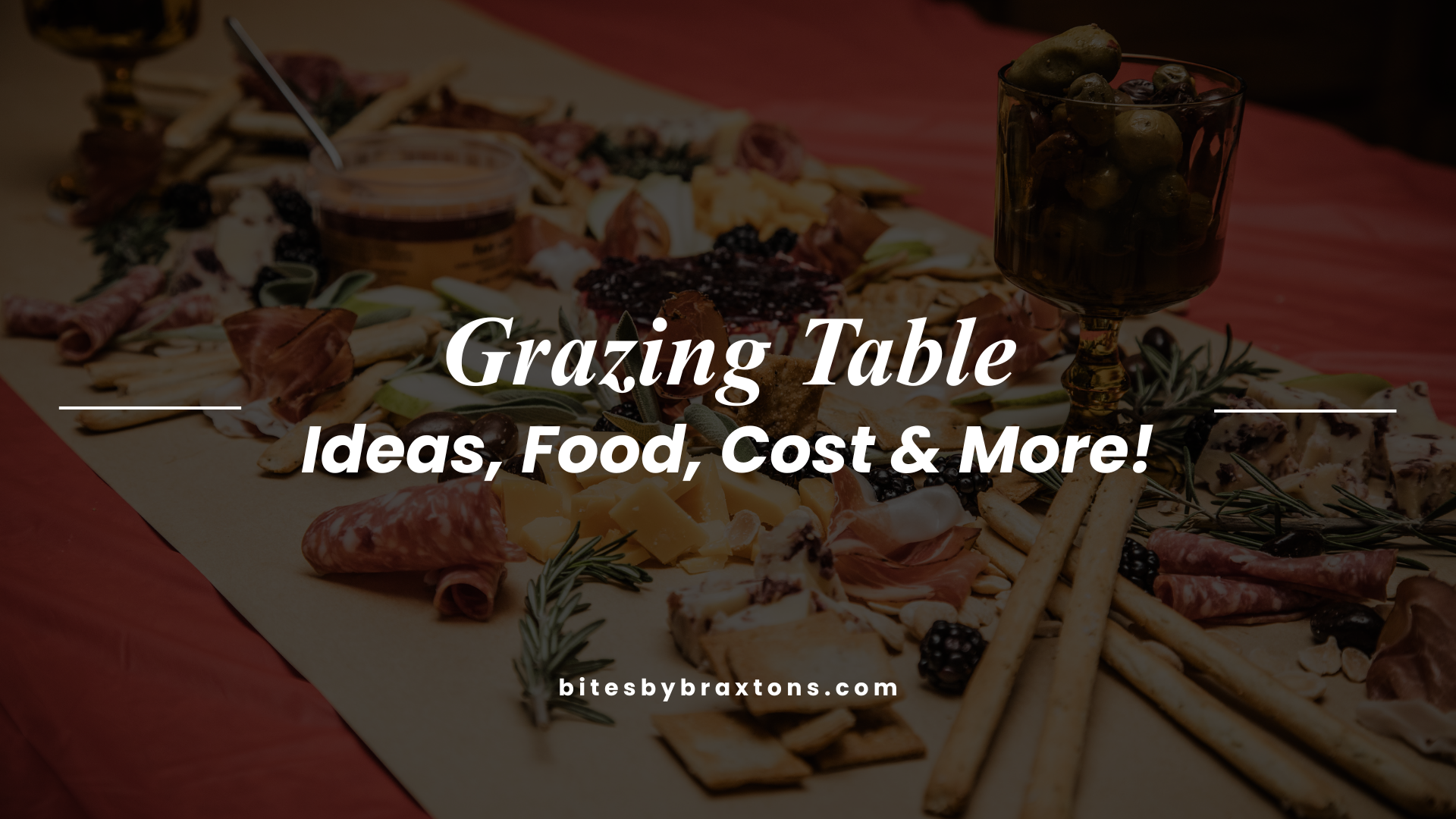
A grazing table is a large, styled spread of food laid directly on a table surface, usually without plates or platters in the traditional sense. Think of it as a charcuterie board that’s been scaled up to feed an entire room and designed to be both eaten and admired.
The whole point is abundance and visual texture. Meats, cheeses, fruits, vegetables, dips, crackers, breads, nuts, olives, spreads, and often fresh flowers or herbs arranged across a table in a way that looks organic but is actually very deliberately put together. Guests graze freely, picking up what they want as the night goes on.
What makes a grazing table different from a buffet is the format and the feel. A buffet has stations. A grazing table has flow. Food is placed directly on butcher paper, wood boards, or marble surfaces rather than in chafing dishes or serving bowls stacked in a line. The experience is tactile and social in a way that a traditional buffet setup rarely is.
It’s also different from a charcuterie board in scale. A grazing board or charcuterie grazing table for a party is essentially the same concept, just sized for one table rather than one hundred people. The grazing table version covers the entire event.
What Goes on a Grazing Table?
This is where most people get overwhelmed, and it doesn’t need to be complicated. The best grazing tables are built on a simple foundation with thoughtful variety layered on top.
The Foundation
Every grazing table needs something from each of these categories to work properly:
Proteins: Cured meats are the anchor. Salami, prosciutto, soppressata, pepperoni, and coppa are all reliable choices. You want at least three varieties for visual contrast and flavor range. If you’re building a more substantial spread, smoked salmon, shredded rotisserie chicken, or turkey slices add bulk and protein without crowding out the visual appeal.
Cheeses: Aim for a mix of textures and intensities. A soft cheese like brie or burrata, a semi-hard option like aged cheddar or gouda, and something crumbly like manchego or parmesan gives guests genuine variety. Three to four cheeses is usually the right range before it gets redundant.
Carbs and vessels: Crackers in a few different styles, sliced baguette or sourdough, and breadsticks give guests something to load everything onto. These also fill the table visually without adding much cost.
Fresh produce: Grapes, strawberries, figs, apple slices, and blueberries add color and sweetness. Cherry tomatoes, sliced cucumbers, snap peas, and radishes add crunch and freshness. This is where the visual drama of a grazing table really comes from, the color contrast between reds, greens, and purples running through the meats and cheeses.
Dips and spreads: Hummus, honey, fig jam, whole grain mustard, olive tapenade, and whipped ricotta all work beautifully. These anchor specific zones of the table and give guests a reason to linger.
Accents: Nuts, olives, cornichons, dried fruits, and fresh herbs like rosemary and thyme fill gaps, add texture, and make the whole table look intentional. These are the finishing details that separate a good grazing table from a great one.
A Simple Grazing Table Food List by Guest Count
| Guests | Meats | Cheeses | Crackers/Bread | Produce | Dips/Spreads |
|---|---|---|---|---|---|
| 20 to 30 | 1.5 to 2 lbs total | 1 to 1.5 lbs total | 2 to 3 varieties | 3 to 4 items | 2 to 3 varieties |
| 40 to 60 | 3 to 4 lbs total | 2 to 3 lbs total | 3 to 4 varieties | 4 to 6 items | 3 to 4 varieties |
| 75 to 100 | 5 to 7 lbs total | 4 to 5 lbs total | 4 to 5 varieties | 6 to 8 items | 4 to 5 varieties |
These are starting points for a grazing table where food is the primary appetizer. If you’re serving a full meal alongside the grazing spread, scale back by roughly 30 percent.
Grazing Table Ideas by Event Type
The specific aesthetic and food choices for a grazing table should match the event. Here’s how the concept adapts across different occasions.
Wedding
A grazing table wedding setup is usually the most elaborate version of the concept. For cocktail hour, it serves as the food entertainment while guests move between the ceremony and reception. For a more casual wedding format, it can replace traditional appetizer courses entirely.
Wedding grazing tables tend to lean toward elegance: brie with honeycomb, prosciutto and fig, roasted grape varieties, edible flowers, and a few show-stopping cheeses. The table is usually longer and more styled, often incorporating florals that coordinate with the wedding decor. For a wedding of 100 to 150 guests, a grazing table for cocktail hour typically runs 8 to 12 feet in length.
Bridal Shower or Baby Shower
Daytime grazing tables are lighter and more pastel-forward in color palette. Think strawberries, raspberries, and watermelon alongside softer cheeses, cucumber slices, and delicate crackers. Macarons, petit fours, or chocolate-dipped strawberries tucked into the spread add a dessert element that works beautifully for afternoon events.
The portions are smaller per person since shower guests typically eat lighter, but the visual styling is usually the most important element of a shower grazing table. It doubles as decor.
Corporate Event
Corporate grazing tables prioritize function over flair. You want food that’s easy to eat while standing and talking, doesn’t require utensils, and works for a range of dietary restrictions. Vegetarian and gluten-free items should be clearly labeled and well-represented. The aesthetic is clean rather than elaborate.
For corporate events, the grazing table often runs alongside a more structured food station rather than replacing it entirely. Think of it as the social anchor of the room rather than the full meal.
Birthday Party
Birthday grazing boards are the most flexible format. They can skew casual (loaded with crowd-pleasers like sharp cheddar, salami, and pigs in blankets alongside the cheese) or upscale depending on the vibe. For outdoor birthday parties in summer, stone fruit, watermelon cubes, and cold cuts work especially well. For indoor evening events, the spread can lean more sophisticated.
How to Build a Grazing Table: Step by Step
Building a grazing table yourself is absolutely doable with the right approach. The biggest mistake most people make is buying food without a plan for how to arrange it, which leads to a table that looks crowded rather than abundant.
Step 1: Set the surface. Butcher paper, kraft paper, or a clean linen runner laid flat across the table is the most common base. Some grazing table setups use large wooden boards or marble slabs as the surface itself, which adds texture but limits your table size.
Step 2: Place your anchor items first. Large cheeses, bowls of dip, and any serving vessels go down first. These are the anchors that everything else builds around. Space them across the length of the table so there’s visual interest throughout, not just in the center.
Step 3: Add the meats. Fold or roll cured meat slices so they have visual dimension rather than lying flat. Fanned salami circles and loosely folded prosciutto look far more intentional than sliced meat stacked in a pile.
Step 4: Fill in with crackers and bread. Fan crackers out from anchor points. Stack bread slices loosely. These add height variation and fill large empty spaces quickly.
Step 5: Add produce for color. Grapes draping off the edge of a board, clusters of strawberries, a pile of figs — fresh produce is what makes a grazing table photograph beautifully and feel alive. Put it wherever the color palette needs something bright.
Step 6: Fill every gap with accents. Nuts, olives, dried fruit, cornichons, and fresh herbs fill the remaining space and make the table look intentional all the way to the edges. No bare surface should be visible when you’re done.
Step 7: Label anything that needs it. Small chalkboard signs or folded cards identify specific cheeses, flag allergens, and make guests feel like someone thought of them.
Grazing Table Cost: What to Budget
Grazing table cost varies significantly depending on whether you’re DIYing it or hiring someone, and on the quality of ingredients involved.
DIY Grazing Table Cost
For a self-assembled grazing table, expect to spend roughly $10 to $20 per person for a moderately generous spread using grocery store ingredients. Premium meats, imported cheeses, and specialty items push that toward $25 to $35 per person.
A grazing table for 30 guests built from scratch typically runs $300 to $600 depending on how elaborate you go. For 60 guests, budget $600 to $1,200. These figures include food only, not rentals, serving vessels, or florals.
Catering a Grazing Table
Hiring a grazing table caterer covers styling, sourcing, setup, and often breakdown. Professional grazing table catering typically runs $35 to $75 per person depending on location, ingredient quality, and event length. For a 50-person event, that’s $1,750 to $3,750 for a fully styled, professionally sourced grazing table that you don’t have to think about.
| Setup Type | Cost per Person | Best For |
|---|---|---|
| DIY, grocery store ingredients | $10 to $20 | Casual parties, tight budgets |
| DIY, specialty/premium ingredients | $25 to $35 | Weddings, upscale events, smaller groups |
| Professional grazing table catering | $35 to $75 | Events where presentation and ease both matter |
The hidden cost of DIY that most people underestimate is time. A well-executed grazing table for 40 to 50 guests takes 2 to 4 hours to source, assemble, and style properly. If you’re also hosting the event, that’s time you probably don’t have.
Grazing Table vs Charcuterie Board: What’s the Difference?
People use these terms interchangeably, and for casual purposes that’s fine. But there are real differences worth understanding when you’re planning an event.
A charcuterie board focuses primarily on cured meats and cheeses, traditionally in a French culinary tradition. The board format is compact, designed to be passed or placed at one section of a table.
A grazing table is broader in both scope and scale. It includes everything a charcuterie board does, plus fresh produce, dips, sweets, breads, and whatever else suits the event. It’s designed to feed a room rather than a small group, and it’s arranged as a destination on the table rather than a single serving vessel.
A charcuterie grazing table is essentially a hybrid: the aesthetic and ingredient approach of a charcuterie board applied at grazing table scale. Most professionally styled grazing tables are this format, heavy on cured meats and cheeses as the anchor, with everything else arranged around them.
| Charcuterie Board | Grazing Table | |
|---|---|---|
| Scale | Small to medium (serves 4 to 12) | Large (serves 20 to 200+) |
| Focus | Meats and cheeses primarily | Meats, cheeses, produce, dips, breads, sweets |
| Setup | One board or tray | Full table surface |
| Time to build | 20 to 45 minutes | 1 to 4 hours |
| Best for | Casual entertaining, smaller groups | Events, parties, weddings, corporate |
Grazing Table Tips That Actually Matter
A few things experienced grazing table builders know that first-timers usually learn the hard way.
Buy more than you think you need. A grazing table that looks abundant at the start of a party and looks picked-over halfway through is far worse than one that still looks full when guests leave. Plan for slightly more food than you expect to need, particularly in produce and crackers, which disappear the fastest.
Put out food in waves. For events over two hours, hold back a portion of the food and replenish the table halfway through. This keeps the spread looking fresh and gives guests a reason to revisit it later in the event.
Keep proteins cold. Cured meats can sit at room temperature for up to two hours safely. Beyond that, quality drops and food safety becomes a concern. For long events, work in rotation with backup from a cooler.
According to the USDA Food Safety and Inspection Service, perishable food should not sit at room temperature for more than two hours, or one hour when temperatures exceed 90°F. For long events, work in rotation with backup from a cooler.
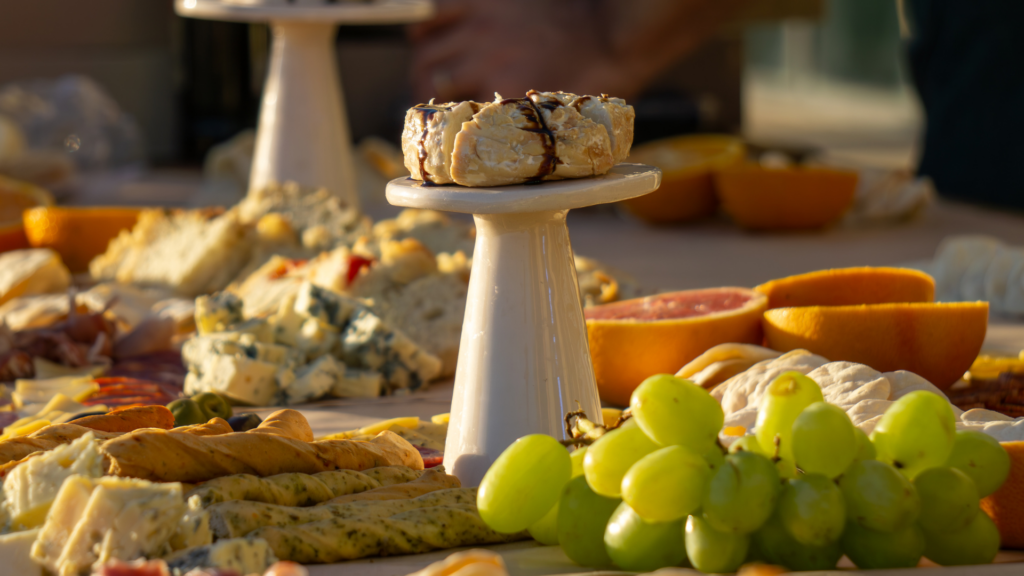
Height creates drama. A flat table looks like a store display. Add height with small risers, wooden cutting boards of different thicknesses stacked slightly, or tall rosemary sprigs. The variation draws the eye across the whole table.
Fresh herbs are your best friend. A handful of fresh rosemary, thyme, or basil tucked between sections of food adds color, fragrance, and the impression of professional styling for almost no cost.
When to Hire a Grazing Table Caterer
DIY works well for casual events under 30 people where you have time to prep and someone to help you set up. Beyond that, the logistics start to get complicated fast.
Hire a professional for events where presentation genuinely matters: weddings, corporate events, milestone birthdays, bridal and baby showers. The difference between a DIY grazing table and a professionally styled one is visible from across the room. The ingredient quality, the styling precision, and the peace of mind of not managing food logistics while also hosting are worth the cost for events that matter.
The other case for hiring out is timing. A grazing table for 60 guests needs to go out within about 30 minutes of guests arriving to look its best. If you’re the host, you’re also getting dressed, greeting people, and managing a dozen other things at that same window. Handing that setup off is the thing that lets you actually be present at your own event.
We Build Grazing Tables for Events Across CT, NY, and NJ
At Bites by Braxtons, we design and build custom grazing tables for events of all sizes across Connecticut, New York, and New Jersey. From intimate bridal showers to large corporate receptions, we handle sourcing, styling, and setup so the table is ready when your guests walk in and looks the way you imagined it.
Every grazing table we build is customized to the event: the guest count, the vibe, the dietary needs, and the aesthetic. We know which cheeses hold up over a long event, which produce adds the best visual impact, and how to build a spread that looks as good at the end of the night as it did at the start.
If you’re planning an event in the tri-state area and want a grazing table that’s actually worth photographing, get in touch with us. We’d love to help you build something memorable.
Frequently Asked Questions About Grazing Tables
What is a grazing table?
A grazing table is a large, styled spread of food arranged directly on a table surface, designed for guests to pick from freely throughout an event. It typically includes cured meats, cheeses, fresh produce, crackers, breads, dips, and accent items like nuts, olives, and honey, arranged to look abundant and visually appealing.
How much does a grazing table cost?
DIY grazing tables run $10 to $35 per person depending on ingredient quality. Professional grazing table catering typically costs $35 to $75 per person, covering sourcing, styling, and setup. For a 50-person event, expect to budget $500 to $3,750 depending on which route you take.
How much food do I need for a grazing table?
For a grazing table where food is the primary appetizer, plan for roughly 1.5 to 2 ounces of each meat variety per person, 1 to 1.5 ounces of each cheese per person, and generous amounts of produce, crackers, and dips to fill the table visually. Scale back by 30 percent if a full meal is being served alongside.
What is the difference between a grazing table and a charcuterie board?
A charcuterie board focuses primarily on cured meats and cheeses and is compact in size, typically serving a small group. A grazing table is much larger in scale, covers a full table surface, and includes a wider range of foods including produce, dips, sweets, and breads alongside the meats and cheeses. A charcuterie grazing table combines the aesthetic of charcuterie with the scale of a full grazing setup.
How long does it take to set up a grazing table?
A small grazing table for 20 to 30 guests takes roughly 1 to 2 hours to source and assemble. A larger table for 60 to 100 guests can take 3 to 4 hours. Professional grazing table caterers typically arrive 2 to 3 hours before an event to set up and style the spread.
Can a grazing table replace a full meal?
It depends on the event format. For cocktail parties and daytime events like bridal showers, a well-stocked grazing table can absolutely serve as the primary food. For evening events where guests are expecting a full dinner, a grazing table works best as a cocktail hour appetizer rather than a meal replacement.
What is the best grazing table setup for a wedding?
For a wedding cocktail hour, a grazing table of 8 to 12 feet works well for 100 to 150 guests. Focus on elegant ingredients: prosciutto, brie, aged cheddar, fresh figs, honeycomb, grapes, and artisan crackers. Include clear labels for any allergen-relevant items and have a caterer refresh the spread at the one-hour mark if cocktail hour runs long.
How do I find grazing table catering near me?
Search for event caterers in your area who specialize in grazing tables or charcuterie styling. Ask to see photos of previous setups, confirm they handle their own sourcing and setup, and make sure they understand your guest count and event format before getting a quote. If you’re in Connecticut, New York, or New Jersey, Bites by Braxtons offers full-service grazing table catering for events of all sizes.
How do I keep a grazing table looking fresh throughout a long event?
Hold back 20 to 30 percent of your food at setup and replenish the table at the halfway point of the event. Keep proteins refrigerated until needed and rotate them onto the table in batches. Replace produce that starts to look tired, particularly cut fruit, which oxidizes faster than most other items.
What dietary restrictions should I consider for a grazing table?
At minimum, make sure there are clearly labeled gluten-free options (most meats, cheeses, fresh produce, and nuts are naturally gluten-free) and vegetarian items (all produce, cheeses, dips, and non-meat proteins like boiled eggs or smoked salmon). For vegan guests, label plant-based items clearly and include at least one or two dedicated vegan-friendly zones on the table.
Final Thoughts on Grazing Tables
There’s something about a grazing table that makes people slow down. They walk over to get a piece of salami and end up staying for ten minutes, building a little plate, talking to the person next to them, coming back for something they missed the first time.
That’s the real function of a well-built grazing table. It’s not just food. It’s a reason for people to gather in a specific place, and it keeps working throughout the whole event rather than disappearing after the first thirty minutes.
Whether you build one yourself or bring in someone to do it for you, the return on a grazing table, in terms of the experience it creates for your guests, is almost always worth what it costs. The events where people say “the food was incredible” are rarely the events with the most elaborate plated courses. They’re the ones where the table looked stunning, the ingredients were good, and everyone kept going back for one more thing.
If you’re planning an event in Connecticut, New York, or New Jersey and want a grazing table done right, get in touch with us directly. We’d love to be part of your event.
Cost estimates in this article reflect general 2026 market ranges and vary by region, ingredient sourcing, and event requirements. Always request a detailed quote before finalizing your catering budget.
Curated by Bites by Braxtons,
Flavorful beginnings, unforgettable endings.