

There’s a particular look people get when they open a bad box lunch at a meeting.
You know the one. The sandwich is soggy. The cookie is broken.
The little bag of chips has been in there so long it’s puffed like it’s trying to escape. Someone picks up the whole box, evaluates it, and quietly sets it back down.
That box cost $14. It also made everyone in the room slightly more miserable for the next 90 minutes, which is its own kind of expensive.
Box lunch catering done well is one of the most efficient formats in catering. Individual portions, no buffet line, no shared serving spoons, everyone eats at the same time and the meeting keeps moving. Done badly, it’s a vending machine with a markup.
The difference between those two outcomes is smaller than most people think. Understanding what goes into a good box lunch catering order, what it costs, and when the format fits the event is most of the distance. That’s what this guide covers.
What Is Box Lunch Catering?
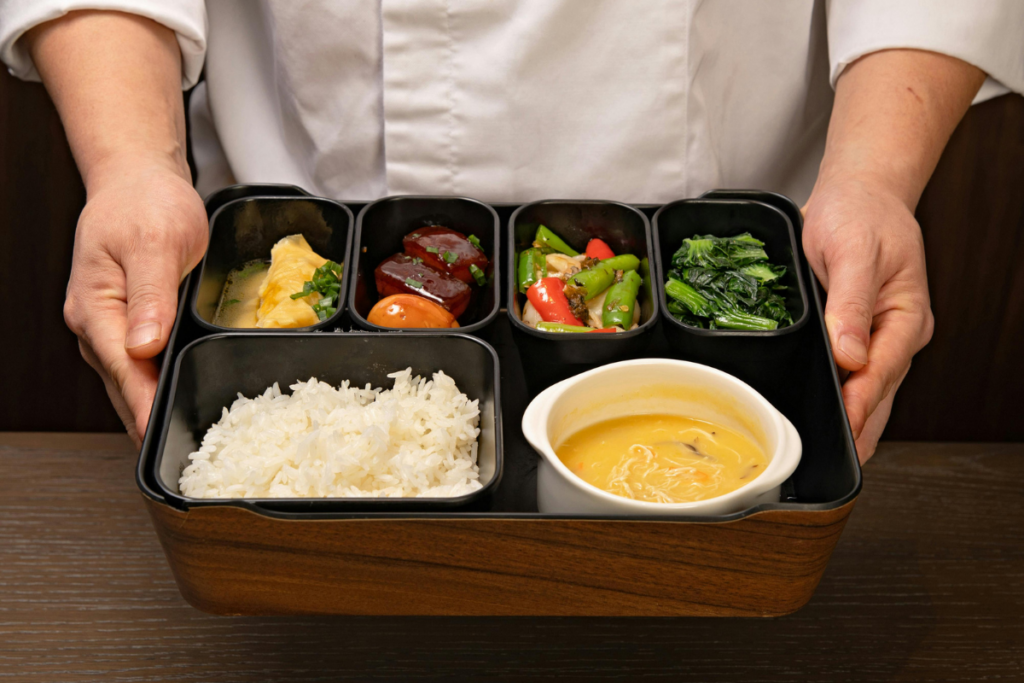
Box lunch catering means individually portioned food, packaged per person, dropped off or picked up for a group event. Each person gets their own box or bag with a complete meal, typically a sandwich or entrée, a side or two, something sweet, and a drink, without a shared buffet line required.
That distinction matters more than it sounds. A buffet requires someone to manage the line, monitor the spread, replenish trays, and clean up.
Box lunch catering requires none of that. The food arrives, someone hands it out, and it’s done.
The tradeoff is customization. A buffet lets guests choose in the moment. With box lunch catering, choices are made at ordering time, which means either knowing your group well enough to choose on their behalf, or offering two or three menu options and letting people self-select.
What Goes in a Catering Box Lunch?
A complete box lunch catering order typically includes:
| Component | What’s Usually There | Notes |
|---|---|---|
| Main item | Sandwich, wrap, salad, or entrée | The anchor, this is what people remember |
| Side 1 | Pasta salad, green salad, chips, fruit, or soup | Cold sides are simplest for transport |
| Side 2 (optional) | Second salad, pickles, crudités | Elevates the box significantly |
| Dessert | Cookie, brownie, fruit, or small sweet | Always include something; it closes the meal |
| Drink | Bottled water, juice, or soda | Pre-selected or left to the host |
| Utensils & napkin | Fork, knife, napkin | Standard; confirm with your caterer |
| Condiments | Mustard, mayo, dressing packet | Ask for these to be included separately |
The main item sets the quality ceiling for everything else in the box. A fresh sandwich made with good bread and properly portioned fillings makes the whole thing feel like someone thought about it. A pre-made sandwich that’s been sitting for 4 hours undercuts the cookie, the pasta salad, and every other good decision in there.
The complaint I hear most often about box lunch catering: soggy bread. Almost always the result of sandwiches being assembled too early and wet ingredients pressed against the bread for hours. The USDA’s food safety guidelines also recommend holding cold foods at 40°F or below throughout service.
When you’re vetting a caterer, ask directly when sandwiches are assembled. The answer is a reliable indicator of whether they’re approaching this as a craft or a volume problem.
Box Lunch Catering Costs in 2026
Here’s what it actually costs, broken down by format and quality tier:
| Tier | Per-Person Cost | What You’re Getting | Best For |
|---|---|---|---|
| Budget | $10 to $14 | Sandwich or wrap, 1 side, cookie, water | Quick office lunch, tight budget |
| Standard | $14 to $19 | Sandwich, 2 sides, dessert, drink | Corporate meetings, training days |
| Premium | $19 to $28 | Upscale sandwich or entrée salad, 2 sides, premium dessert | Client meetings, executive lunches |
| Gourmet | $28 to $45+ | Chef-built entrée box, 2 quality sides, premium dessert, drink | Presentation-level events |
For most corporate orders, the standard tier ($14 to $19) is where the value is. Guests feel fed and respected. The cost is low enough that ordering for 25 to 50 people doesn’t require a budget meeting.
Total cost by group size:
| Group Size | Budget Tier | Standard Tier | Premium Tier |
|---|---|---|---|
| 10 people | $100 to $140 | $140 to $190 | $190 to $280 |
| 25 people | $250 to $350 | $350 to $475 | $475 to $700 |
| 50 people | $500 to $700 | $700 to $950 | $950 to $1,400 |
| 100 people | $1,000 to $1,400 | $1,400 to $1,900 | $1,900 to $2,800 |
These cover food only. Delivery runs $15 to $40 depending on distance. Some caterers waive it above a minimum order, always confirm before comparing quotes.
According to the National Restaurant Association’s 2024 State of the Restaurant Industry, group catering orders from professional caterers have risen consistently, with the individual portion format growing as the dominant format for corporate events. Hybrid work schedules and a preference for contactless service have both pushed that.
When Box Lunch Catering Is the Right Call (And When It Isn’t)
Most of the times I’ve seen box lunch catering go wrong, it was less about the food and more about a mismatch between format and event. Someone chose it because it was easy, not because it fit what the event actually needed.
Here’s where it genuinely excels.
Working meetings and training sessions. This is the format’s best context. People are eating while doing something else, the meeting doesn’t stop for a buffet line, and everyone gets an identical experience at the same time. I’ve catered dozens of all-day training sessions this way and the feedback is consistently positive precisely because nobody has to make decisions about food during the session.
Events with a confirmed, fixed headcount. Box lunches are ordered per person. Thirty people, thirty boxes. There’s no guessing at portions, no tray that runs out, and no situation where the person who went through the line last gets half a serving.
Events where dietary tracking matters. Each box can be labeled. The vegetarian gets the right box. The person managing a gluten situation gets theirs. No scanning a shared buffet trying to calculate what’s safe.
Venues without a warming kitchen. Box lunches require nothing from the venue except a table. No chafing dishes, no outlets, no coordination with the kitchen staff.
And where it quietly fails.
A client asked me last fall about using box lunch catering for a retirement party for someone who’d been with the company 28 years. I talked her out of it.
Not because the food would have been bad. We do excellent boxes.
But a box lunch sends a signal: efficiency. It says “we needed to feed people.” A retirement party for 28 years of someone’s career deserves a format that says something else.
Box lunches also struggle when guests are arriving over a long window (they were made this morning and will look it by 2pm), when dietary complexity requires kitchen-level separation that individual labeled boxes can’t guarantee, and anytime the meal is meant to be the event rather than fuel for the event.
| Event Type | Box Lunch Rating | Why |
|---|---|---|
| Corporate training / workshop | ⭐⭐⭐⭐⭐ | Perfect format, efficient, individual, contained |
| Working meeting (10 to 50 people) | ⭐⭐⭐⭐⭐ | No line, no setup, meeting doesn’t stop |
| Conference or seminar | ⭐⭐⭐⭐ | Scales well; works across floors and rooms |
| Office party | ⭐⭐⭐ | Fine but a buffet creates more energy |
| Client appreciation lunch | ⭐⭐ | Too informal for a high-impression event |
| Networking event or reception | ⭐ | Wrong format for mingling; use finger food instead |
How to Build a Box Lunch Catering Menu That People Actually Eat
The menu conversation is where I see the most well-intentioned orders go wrong.
The instinct is to offer options. Eight sandwich choices, multiple side variations, a choose-your-own dessert. It feels generous and accommodating. What it actually creates is a logistics puzzle, labeling errors, and boxes that end up at the wrong seats, which is more disruptive than just picking two things well.
Two options cover almost every group: one with a protein, one vegetarian. That’s it. If there’s a specific dietary concern you know about in advance, a third option addresses it cleanly. Any more than three and you’re adding complexity without meaningfully improving anyone’s experience.
The vegetarian option deserves real attention. The most common box lunch catering failure I see isn’t a bad sandwich, it’s a caprese on limp ciabatta sitting next to 24 turkey-avocado-sourdoughs.
The person eating the vegetarian box notices. Everyone at their table notices. If the two options aren’t built with equal care, you’ve made one of your guests feel like an afterthought.
Cold sides are the right call almost every time. Pasta salad, green salad, fruit, coleslaw, or chips all travel without quality loss and hold for hours. Warm sides require insulated packaging, tighter delivery windows, and more coordination, and in my experience, they rarely taste significantly better than cold alternatives by the time the box is opened.
Always include something sweet. It doesn’t need to be elaborate. A decent chocolate chip cookie costs under $2 per person and changes how the whole box lands. A box without a dessert element feels like something was forgotten.
A clean, well-built box lunch catering menu for 25 people looks like this:
| Option A | Option B |
|---|---|
| Turkey and avocado on sourdough | Caprese on ciabatta (vegetarian) |
| Pasta salad | Pasta salad (same) |
| Seasonal fruit cup | Seasonal fruit cup (same) |
| Chocolate chip cookie | Chocolate chip cookie (same) |
| Bottled water | Bottled water (same) |
Same sides and dessert for both options. Same perceived value. Zero ambiguity at the table about who got the better box.
And label everything, on the outside, in large text, with allergen flags if relevant. I’ve watched a nut allergy situation unfold at a corporate lunch because the labeling was a small typed sticker on the bottom of the box. That’s not a catering issue, it’s a safety issue. Get it right.
How Much Box Lunch Catering Per Person?
One box per person. The real question is what’s in it, and how to account for the ways headcounts drift.
| Event Context | Recommended Per Person |
|---|---|
| 60-minute working lunch | 1 standard box (entrée + 1 side + cookie) |
| 90-minute training session | 1 standard box + additional sides or snacks |
| Full-day conference (one meal) | 1 premium box with 2 sides and beverage |
| Event with no dinner following | 1 box + extra dessert or snack option |
| Event where breakfast was provided | 1 lighter box (salad + half sandwich) |
Order for 5 to 10 percent above your confirmed headcount.
Headcounts shift. Someone brings a last-minute plus-one. An assistant gets added the morning of.
Box lunches don’t replenish like a buffet. If you run short, you run short visibly, in a room full of people who just watched it happen. Three extra boxes costs less than $60. Order them.
How to Order Box Lunch Catering Without the Common Mistakes
These show up often enough that they’re worth naming before you place the order.
Ordering too close to the event. Most operations need 24 to 48 hours minimum. Orders of 50 or more need 3 to 5 business days. The difference between a 48-hour order and a same-day order isn’t just scheduling, it’s usually sandwich freshness, labeling accuracy, and whether anyone had time to confirm the dietary requests properly. Rush catering tends to look like rush catering.
Not confirming the delivery window specifically. “We’ll be there between 11 and 11:30” is not confirmed. For a meeting starting at noon, a driver stuck in traffic at 11:40 becomes a real problem. Before the order, get the driver’s number, confirm the building entrance, ask about parking or security sign-in, and agree on an exact arrival time with a 15-minute buffer built in.
The $10 box for a $10,000 meeting. The cost difference between budget and standard tier for 20 people is roughly $100. If the meeting involves a client, a board, or anyone whose perception of your organization matters, that $100 is not where you should be economizing. The box arrives and it’s the first impression of how seriously you’re taking the event.
At Bites by Braxtons, we do box lunch catering for corporate events, training sessions, and meetings across Connecticut, New York, and New Jersey.
Every order is assembled the same morning it’s delivered, labeled clearly, and confirmed for timing before it leaves. Our catering packages cover both box lunch and full-service formats. If you’re not sure which fits your event, reach out directly and we’ll work through it. For buffet or other formats, our catering for 50 people guide and catering food ideas breakdown cover those in detail.
Frequently Asked Questions
How much does box lunch catering cost per person?
Box lunch catering costs $10 to $45 per person in 2026 depending on the quality tier.
Budget orders run $10 to $14. Standard orders run $14 to $19. Premium and gourmet boxes range from $19 to $45. Most corporate meetings land in the $14 to $22 range.
What is typically in a catering box lunch?
A standard box lunch catering order includes a main item (sandwich, wrap, or salad), one or two sides, a dessert, utensils and a napkin, and condiments. Premium boxes may include a hot entrée, a specialty dessert, and a bottled beverage.
How far in advance do I need to order box lunch catering?
Most box lunch catering operations require 24 to 48 hours notice for standard orders. Orders of 50 or more should be placed 3 to 5 business days ahead. For large conferences or events with dietary complexity, 1 to 2 weeks is safer. Same-day catering is available from some chains but rarely reflects the quality of a properly planned order.
Is box lunch catering better than a buffet?
For working meetings, training sessions, and events where efficiency matters, box lunch catering typically outperforms a buffet. No setup, no service staff, no managing a shared line. For social events, receptions, or anything where the food is meant to encourage mingling, a buffet or finger food format creates a better guest experience.
What are the best box lunch catering options for a corporate meeting?
For a corporate meeting, the best box lunch catering includes a same-day-assembled sandwich or wrap, cold sides that travel without quality loss, and a dessert. Two menu options covering meat and vegetarian handles most groups without complexity. Clear labeling on every box is essential.
How much box lunch catering should I order per person?
One box per person, plus 5 to 10 percent above your confirmed headcount. For a 90-minute training session, consider adding a supplemental side or snack. Box lunches don’t replenish like a buffet, so ordering slightly over is always better than running short.
Final Thoughts on Box Lunch Catering
The soggy sandwich at the start of this post isn’t just a bad catering outcome. It’s a diagnostic. Someone ordered on autopilot, assumed cheapest was fine, gave minimum notice, and figured box lunch catering was a commodity.
It’s not.
The quality difference between a well-executed order and a poorly executed one is visible and felt in the room. At a meeting where people are doing actual work, that gap has a real cost, in attention, in the impression it creates, in whether the event landed the way it was supposed to.
Same-morning assembly. Good bread. Cold sides. Clear labels. Confirmed delivery.
Every one of those is decided before the order is placed. Make them deliberately and box lunch catering is one of the most efficient, reliable formats you can run.
Pricing in this article reflects general 2026 US market rates. Costs vary by caterer, region, and event requirements. Always confirm pricing directly with your caterer before finalizing any order.
Curated by Bites by Braxtons,
Flavorful beginnings, unforgettable endings.