

Food trucks for weddings have moved from a quirky add-on to a legitimate reception style, and the shift makes sense once you see the math. A single truck can serve 100 to 150 guests in roughly two hours, often for less than half the cost of a plated dinner. Couples are choosing them not because catering budgets are shrinking, but because guests genuinely have more fun standing around a truck window than waiting on a server.
This guide walks through what food trucks for weddings actually cost, how to pick a menu style that fits your reception, and the questions you need to ask before you book one.
What Are Food Trucks for Weddings?
Food trucks for weddings are mobile kitchens hired to cook and serve a couple’s wedding meal on-site, either as the main reception dinner or as a secondary station alongside traditional catering. The format started with backyard weddings but now appears at venues of every size, including formal estates and ballrooms that have added designated parking spots specifically because of guest demand.
A mobile vendor typically arrives a few hours before service to set up, cooks fresh on-site, and serves guests directly from a window rather than plating everything in a back kitchen. Some couples book one as the entire meal. Others pair two vehicles (a savory option and a dessert option) or bring one in just for late night bites after a seated dinner winds down.
This shift reflects a broader change in what couples actually want from their reception. A decade ago, a formal plated dinner was close to the default expectation. Today, the emphasis has moved toward experiences guests remember and talk about.
Watching a chef plate food fresh in front of you tends to land better than a tray that has been sitting under a warmer for an hour. This shift is showing up in industry numbers too. A recent CNBC report on the food truck industry found that many operators are now leaning on private events and catering, including weddings, to diversify revenue and offset rising operating costs.
How Much Do Food Trucks for Weddings Cost?
Pricing for food trucks for weddings usually falls into one of three structures, and which one a vendor uses depends on their business model rather than the quality of food.
Per-person pricing is the most common format for full meal service. Most trucks charge between $15 and $35 per guest depending on cuisine and protein choices, with a minimum guest count of 30 to 75 required to book.
Flat event pricing is common for smaller weddings or shorter service windows. Expect a flat rate of $1,000 to $3,000 for two to three hours of service, which usually covers the truck, staff, and a set menu for up to about 100 guests.
Hourly pricing shows up most often with dessert trucks, coffee trucks, or late night snack trucks added on top of a separate main meal. These typically run $500 to $1,500 per hour with a two-hour minimum.
| Pricing Model | Typical Cost | Best For |
|---|---|---|
| Per-person | $15 to $35 per guest | Full meal service, 75+ guests |
| Flat event rate | $1,000 to $3,000 | Smaller weddings, 2 to 3 hour windows |
| Hourly | $500 to $1,500 per hour | Dessert, coffee, or late night add-ons |
For comparison, a traditional plated wedding dinner in the Tri-State area commonly runs $100 to $200 per guest once staffing, rentals, and service fees are included. Food trucks for weddings can come in 40% to 60% lower per guest for an equivalent guest count, which is the single biggest reason couples are switching formats.
Price within each tier still varies quite a bit, and a few factors explain most of the spread. Cuisine type matters since a seafood boil or premium protein menu costs more to source than a pulled pork or taco menu. Travel distance adds a fee once a venue sits more than 25 to 30 miles from the vendor’s home base, which is worth checking early if your venue is rural.
Service duration affects price too, since a two hour window costs less than a four hour open bar style service where guests can return for seconds throughout the night. Add-ons like a second truck, specialty drinks, or a custom menu built around dietary restrictions typically push the per-guest number toward the higher end of each range.
Food Truck Wedding Catering vs Traditional Catering
The decision usually comes down to three factors: budget, formality, and guest experience.
| Factor | Food Trucks for Weddings | Traditional Plated Catering |
|---|---|---|
| Cost per guest | $15 to $35 | $100 to $200 |
| Service style | Walk-up, casual | Seated, server-delivered |
| Setup needs | Power and parking access | Full kitchen or prep tent |
| Best for | Backyard, barn, outdoor venues | Ballrooms, formal receptions |
| Guest experience | Interactive, social | Structured, traditional |
Neither option is universally better. Food trucks for weddings fit a casual outdoor aesthetic and a couple who wants guests mingling instead of seated for an hour-long dinner service. A plated dinner still makes sense for a formal venue, a larger guest list with a tight timeline, or a couple who wants a traditional multi-course experience.
What Menu Styles Work Best for Wedding Food Trucks?
The most successful food trucks for weddings specialize in one cuisine and execute it well, rather than offering an overly broad menu that slows down service. A focused menu also tends to taste better, since a kitchen built around five or six dishes can source higher quality ingredients than one trying to cover a dozen options.
BBQ remains one of the most requested formats for outdoor weddings because the food holds well in warm weather and feeds a crowd efficiently. A typical BBQ wedding spread includes smoked brisket or pulled pork, two or three sides like mac and cheese or coleslaw, and rolls, which keeps the line moving fast even with a large guest count.
Taco and street food setups are popular for couples who want built-in dietary flexibility, since guests can build their own plate around proteins, vegetarian fillings, and toppings without special-ordering anything. This format also handles last-minute headcount changes gracefully, since ingredients can be portioned more loosely than a fixed plated menu.
Wood-fired pizza works well for evening receptions and rehearsal dinners, partly because the visual of a live oven adds entertainment value while guests wait, and partly because pizza reheats and holds better than most other hot food if service runs long.
Dessert and coffee vehicles are increasingly booked as a second addition alongside a full dinner, most often timed for the one to two hour mark after dinner service when energy on the dance floor starts to dip and guests appreciate a sugar or caffeine boost to keep the night going.
How Many Guests Can One Vehicle Serve?
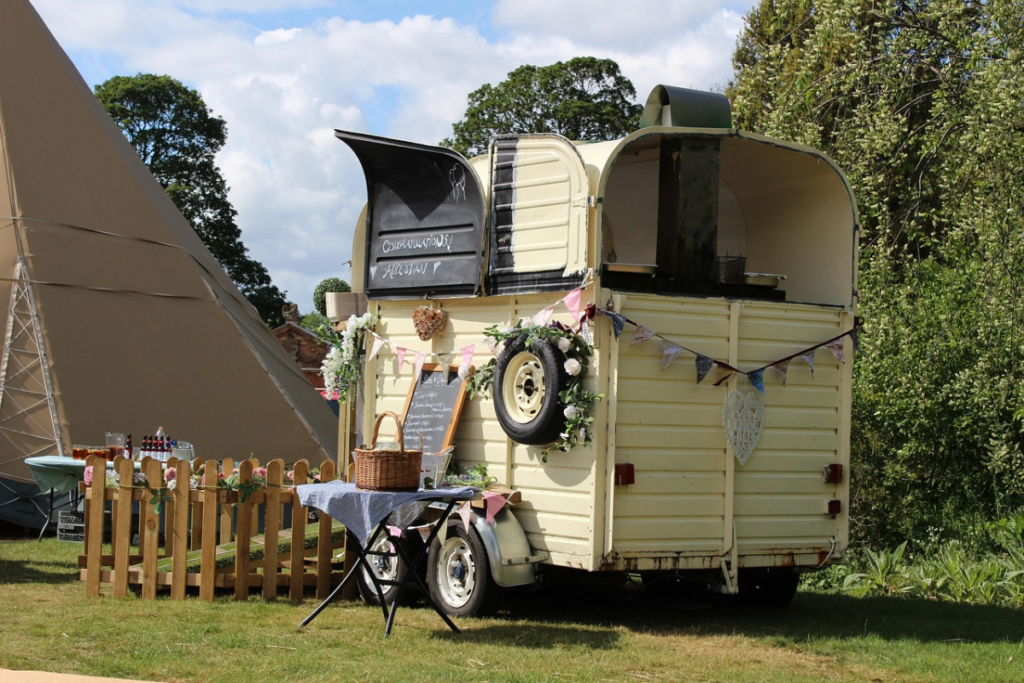
Most single vendors comfortably handle 100 to 150 guests within a two to three hour service window, though this depends heavily on menu complexity. A simple one-protein BBQ menu moves faster than a made-to-order taco bar with six topping choices, since each additional decision point in the line adds seconds per guest that compound quickly across a large list.
For weddings over 150 guests, couples often book two vehicles running simultaneously rather than asking one to handle the full list, since a single line backing up past 20 minutes starts to noticeably affect the guest experience and pulls people away from the reception itself. Splitting service across two stations also gives guests a choice, which tends to increase satisfaction even when both options are equally good.
Questions to Ask Before Booking Food Trucks for Weddings
Before signing a contract for food trucks for weddings, confirm these details in writing rather than assuming they are included, since pricing structures vary widely between vendors and verbal assumptions are the most common source of day-of surprises.
Ask whether the quoted price includes staff, since some vendors charge separately for an additional server to handle the line during peak service. Ask about power requirements, since not every vehicle is fully generator-equipped and some venues restrict generator noise during ceremonies or have specific electrical hookup locations.
Ask about backup plans for rain or extreme heat, since service happens outdoors and weather contingencies vary significantly by vendor. Ask whether the business carries its own liability insurance, which most venues require before allowing any outside vendor on-site, and request that documentation well before your wedding date rather than the week of.
According to The Knot’s wedding food truck guide, wedding planning experts generally recommend treating food trucks as a complement to full-service catering rather than a complete replacement, since most trucks do not handle rental coordination or post-event cleanup the way a full catering team does.
How Far in Advance Should You Book?
Most experienced vendors recommend booking food trucks for weddings 9 to 12 months ahead for a peak season date, since the most established operators in any region often hold only one event per weekend and popular Saturdays in late spring and early fall fill up first. Couples planning a date between May and October should treat booking as a priority alongside the venue itself rather than something to circle back to later.
Off-peak dates, particularly weekday weddings or winter ceremonies, offer more flexibility and sometimes better pricing, since vendors have more open availability to negotiate around. If your date falls during a major local event, a holiday weekend, or graduation season, book even earlier, since demand for any outdoor catering format spikes during those windows.
Logistics to Confirm With Your Venue
Booking the vendor is only half the planning work. The venue itself needs to approve a few logistical details before a mobile kitchen can operate on-site, which is one of the most overlooked steps when planning food trucks for weddings.
Confirm there is a flat, paved or stable surface large enough for the vehicle to park and operate safely, since grass or gravel can be a problem for larger trucks. Confirm whether the venue allows generators, since some noise-sensitive locations restrict generator use during ceremony hours.
Confirm there is adequate space between the serving line and guest seating, since a poorly placed line can create a bottleneck near the dance floor or photo areas. Ask your venue coordinator whether they have worked with mobile vendors before, since a venue with prior experience with food trucks for weddings will usually flag potential issues before they become day-of problems.
Do You Need a Permit for Food Trucks for Weddings?
In most cases, the truck’s operator handles permitting rather than the couple, since food trucks are required to hold a mobile food vendor license through their home municipality. However, some venues and towns require an additional temporary event permit for outdoor catering, particularly for private estates or public parks.
It’s worth confirming directly with your venue whether they have an approved vendor list or specific insurance requirements, since this varies significantly by town across Connecticut, New York, and New Jersey.
Frequently Asked Questions
How much do food trucks for weddings cost for a 100 person wedding?
For 100 guests, food trucks for weddings typically run $1,500 to $3,500 total for per-person pricing, or a flat rate closer to $2,500 to $3,000 if the vendor charges by the event rather than by the head.
Are food trucks for weddings cheaper than traditional catering?
Yes, in most cases. Food trucks for weddings typically cost 40% to 60% less per guest than a plated dinner once staffing, rentals, and service fees for traditional catering are factored in.
Can a food truck be the only food at a wedding?
Yes, many couples use a single food truck as their entire reception meal, particularly for guest lists under 150 at outdoor or casual venues. Larger weddings sometimes pair two trucks to keep service times reasonable.
What happens if it rains on a food truck wedding?
Most trucks can still operate in light rain since the kitchen itself is enclosed, but guests will need covered seating nearby. Always confirm your vendor’s rain contingency and your venue’s tent or indoor backup option in advance.
Do wedding food trucks provide plates and utensils?
Most trucks include disposable plates, napkins, and utensils in their base pricing, but upgraded or eco-friendly tableware is sometimes an additional cost. Confirm this detail before signing your contract.
Final Thoughts
Food trucks for weddings work because they solve two problems at once: they lower the per-guest cost of feeding a crowd, and they turn dinner into part of the entertainment rather than a formal interruption to it. The format fits casual, outdoor, and barn-style weddings especially well, though it’s worth weighing menu complexity and guest count carefully before deciding between one truck and two.
If you’re planning a wedding in the Connecticut, New York, or New Jersey area and weighing food trucks for weddings against a full catered reception, our team is happy to walk through both food truck and wedding catering options based on your guest count and venue.
Curated by Bites by Braxtons,
Flavorful beginnings, unforgettable endings.